
Exotic ants
Red imported fire ants
Red imported fire ants (RIFA, scientific name Solenopsis invicta) are exotic to the NT. They are a serious biosecurity threat to the Northern Territory because their stings can seriously harm people, pets, wildlife and plants.
If RIFA were to become established, they would threaten our outdoor lifestyle, harm our iconic wildlife and have serious consequences for the health of Indigenous Australians.
RIFA infest grassy areas like yards and parks and are extremely aggressive. If disturbed, they swarm and sting nearby people and animals. The stings are painful and erupt into severe blistering that can result in scarring. Bad stings can lead to anaphylactic shock, which can be life threatening.
Appearance
RIFA are:
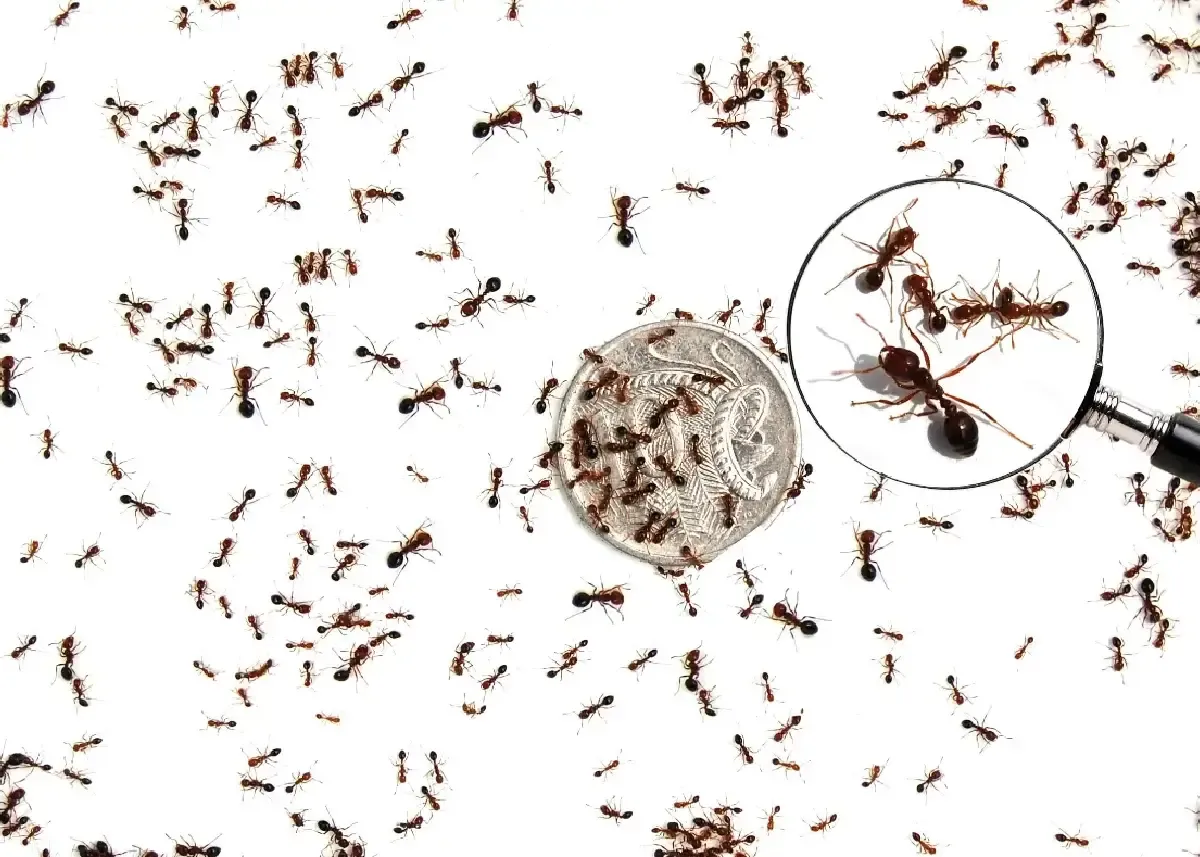
- copper brown in colour, with a darker abdomen
- quite small, 2 to 6mm in size
- found in a variety of sizes in the one nest.
Fire ant nests can appear as mounds or flat patches of loose sifted soil with no obvious or exit holes.
RIFA are much smaller than many NT ant species.
Identifying RIFA requires a specialist identifier, so its important to report any suspicious ants.
Don’t risk getting stung by trying to collect specimens yourself. Request a specialist by contacting NT DAF Entomology:
- call 08 8999 2218
- email insectinfo@nt.gov.au.

How to protect the NT
Biosecurity is everyone’s responsibility. To help protect the NT, you should do the following:
- comply with movement restrictions on infested sites to prevent transport and spread of RIFA
- check vehicle and goods when leaving any site where ants may be present
- check vehicles and property before moving to a new location, especially interstate
- avoid transporting plant or soil matter between states or territories
- watch out for exotic pests when dealing with imported goods and mail from overseas.
If you are moving from interstate
Anyone moving from south-eastern Queensland could accidentally bring RIFA with them. If you’re moving from anywhere between the Pine River, the Gold Coast and the base of the Toowoomba Range and Scenic Rim, its important you follow precautions.
Check for ants
When packing items that have been stored outside, ensure they are free of ants. It is important to check the underside of any item that has been stored on the ground for an extended period.
Keep your items clean and contained
When packing for your household uplift, ensure items that have been stored outdoors are clean and free of soil and plant material like grass clippings and leaf litter.
Ensure all items being sent are kept on a solid concrete floor under cover to stop RIFA infesting them. Never store items on soil outdoors before sending them interstate.
Clean your car and trailer
Vehicles can also spread RIFA if they have been parked on or near a nest, and could spread a range of other invasive species too.
Before bringing your car or trailer to the NT, ensure it has been washed to remove all soil and plant materials. The undersides of cars and trailers are especially suitable for RIFA, so make sure they are clean too.
You can make sure your car is clean by using a drive-through car wash the day it is sent to the NT. After, make sure it is parked on a concrete or bitumen surface to prevent a new infestation.
Know your fire ant carriers
Many items can become infested with RIFA nests. Moving these items could allow RIFA to move into the NT.
This can include common items packed during household moves, including outdoor settings, potted plants, lawnmowers (push and ride on types) and garden equipment.
Some items are higher risk than others and need a permit to bring into the NT. These include:
- agricultural, earth moving and horticultural equipment
- potting mix, garden soil, mulch, compost, manures
- hay, silage and chaff
- potted plants (including indoor and outdoor plants), nursery stock and turf
- landscaping supplies such as sand, gravels, aggregates and recycled concrete.
Permits for fire ant carriers
If you need to import an RIFA carrier listed above, you can get a permit. To apply, contact NT DAF Biosecurity:
- call 08 8999 2118
- email plantbiosecurity@nt.gov.au.
Stop the spread
There is currently a National Fire Ant Eradication Program supported by all Australian states and governments.
Find out more on the National Fire Ant Eradication Program website.
Report fire ants
If you think you have seen RIFA in the NT, call the exotic plant pest hotline on 1800 084 881.
Print all pages in this section
Give feedback about this page.
Share this page:
URL copied!