
Buffel grass
Scientific name: Cenchrus ciliaris and C. pennisetiformis.
Declaration status: Declared weed for management in the Northern Territory (NT). Buffel grass has a statutory weed management plan that outlines the legal requirements for control.
Buffel grass is native to tropical and sub-tropical regions of Africa, India and Indonesia. It is now widespread across Central Australia and also occurs in the Katherine and Darwin regions.
Buffel grass can dominate native ecosystems, increasing fuel loads, impacting on native species and Aboriginal cultural sites and practices. At the same time, buffel grass remains valued by many within the pastoral industry as an improved pasture species.
For more information, read the:
Management plan
The buffel grass weed management plan 2026-2036 PDF (2.6 MB) was approved by The Minister for Lands, Planning and Environment and came into effect 1 May 2026.
This plan sets out the legal requirements to manage buffel grass in the Northern Territory.
The process to develop the plan and how community and stakeholder feedback has been incorporated is outlined in the consultation summary PDF (728.2 KB).
Read the factsheets for a summary of:
Economic impact assessment
As part of the buffel grass management planning process the Minster for Lands, Planning and Environment commissioned Charles Darwin University’s (CDU) Research Institute for the Environment and Livelihoods to assess:
- economic impacts of buffel grass both positive and negative on the economy, community, industry and environment of the NT
- costs to manage buffel grass in the Alice Springs municipal area, under 3 management scenarios - current reactive approach, increased active management and good or proactive management over short, medium and long term.
Read the:
Impact
Originally planted for pasture and dust control in Central Australia, buffel grass has now spread greatly, impacting on a range of ecosystems.
Buffel grass can have all of the following impacts:
- changes to fire regimes - its high biomass fuels intense fires, and its quick post-fire regrowth supports more frequent burning, which impacts many native species
- competition with native species - it outcompetes native plants, reducing diversity and degrading habitat for native animals
- impacts on Aboriginal cultural practices - its high biomass and fuel loads limit Aboriginal people’s ability to access country, damages significant cultural sites and reduces the availability of bush foods and medicines.
Buffel grass imposes growing economic costs through the increased need to manage fire risks and to protect biodiversity, assets and infrastructure.
Identification
Use this as a guide, as there may be other native plants or weeds that look similar.
For more information, see the buffel grass control guide PDF (22.5 MB) or buffel grass identification fact sheet PDF (4.9 MB).
Habit
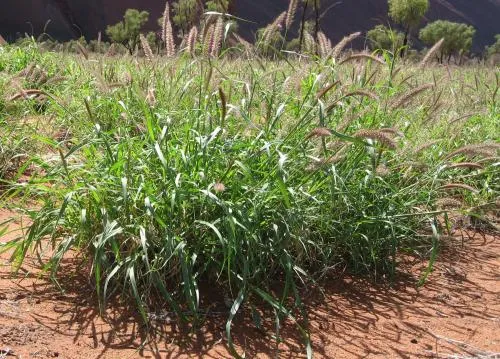
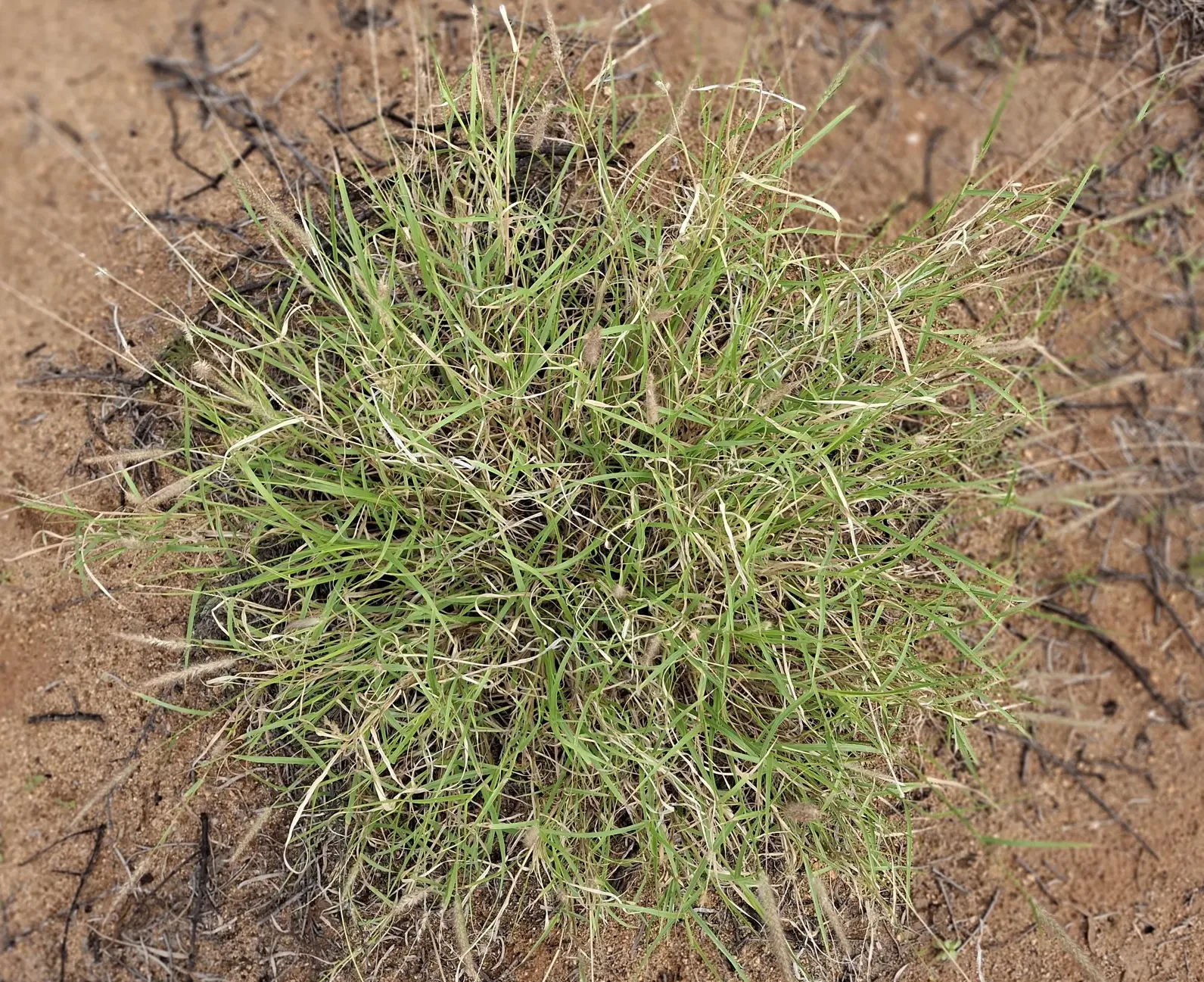
Tufted perennial grass, 0.1 to 1m tall and wide.
Leaves
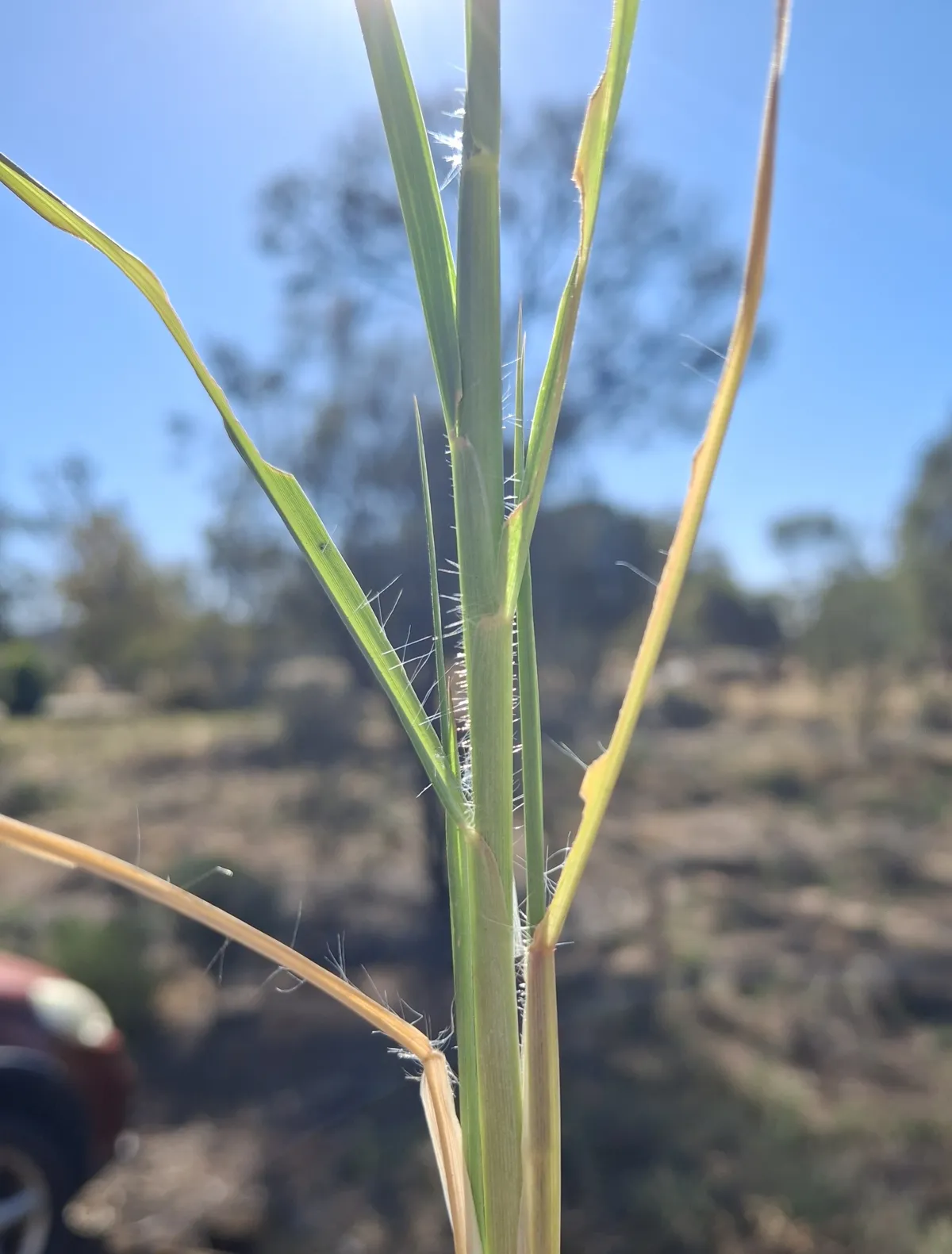
Leaf blades are:
- flat, long and bright green-bluish in moist conditions
- straw-coloured when dormant or stressed
- sometimes hairy or reddish near the base.
There are hairs where leaf blades meet the main stem and sheath.
Seed heads
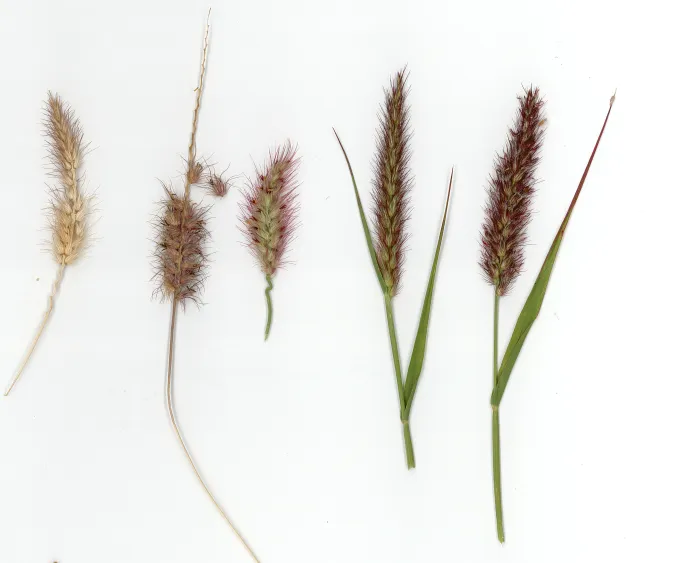
Spike or foxtail shaped, 2 to 15cm long and 1 to 2.5cm wide.
The colour can vary between:
- green
- reddish
- deep purple
- straw-coloured.
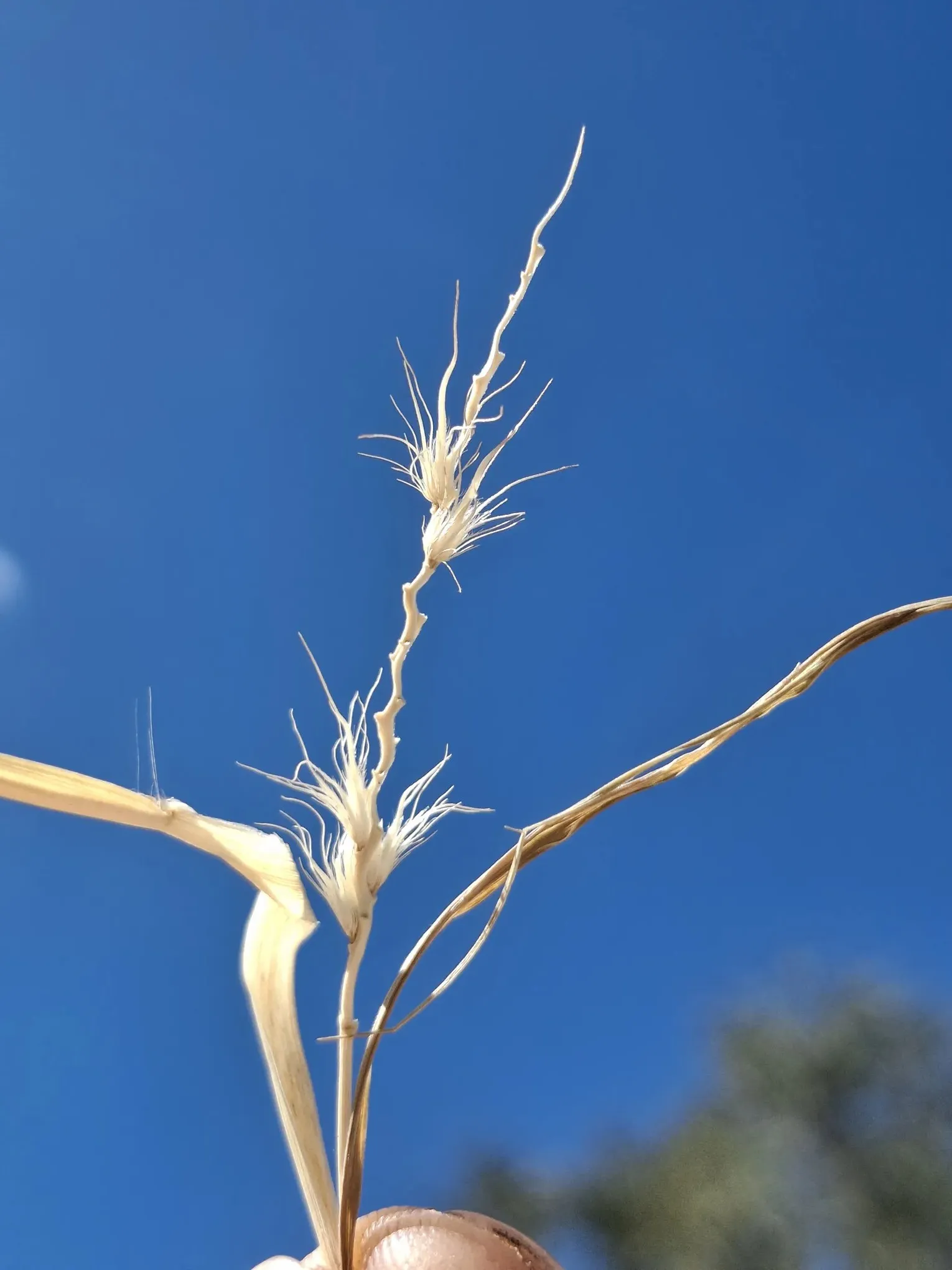
Zigzag-shaped axis of the seed head after the burrs detach.
Burrs
One to four spikelets with one seed each, surrounded by inner ring of flattened soft bristles and an outer ring of finer bristles.
One flattened bristle longer than the others.
If you are unsure, contact the Weed Management Branch.
Spread
Buffel grass spreads readily across most habitats in Central Australia, particularly in areas of high moisture or nutrient density and around disturbed ground.
Buffel grass can be readily spread by wind, water or by attachment to people, animals, machinery, vehicles and equipment.
Control
For detailed information on control options, see the buffel grass control guide PDF (22.5 MB).
Disturbance can promote buffel grass growth, so it is important that any control efforts are followed up or the situation may get worse.
Chemical control
There are several chemical control options available to manage buffel grass. See the control guide for suitable options for different situations.
Glyphosate is generally considered the most suitable option for general use.
Using an adjuvant (also known as wetters, stickers, penetrants, thickeners, surfactants, acids and buffers) is highly recommended in Central Australia as they assist to overcome common challenges such as poor water quality, arid summer conditions and limited spray windows.
Non-chemical control
Hand pulling and grubbing
Weeds, including their roots, are physically pulled out of the ground by hand or using hand tools. This is an effective method of control for individual weeds and recent outbreaks that haven’t released seeds yet, but it requires a lot of labour.
Take care to minimise soil disturbance and erosion when physically removing buffel grass, particularly when the soil is dry.
Cutting, slashing or mowing
Brush cutting, slashing or mowing can be used to reduce fuel loads and may suppress seed development if done prior to seeding. However, buffel grass can grow back strongly after disturbance, and these activities may increase the long-term severity of buffel grass infestation if not followed up with further control.
Slashing 2 months prior to chemical control of regrowth can improve herbicide effectiveness and reduce overall control costs.
Fire
Buffel grass grows back quickly after fire, so fire is not a recommended tool on its own for reducing or eliminating buffel grass. Over time repeated burning promotes its dominance over native species, which do not regrow as quickly.
Fire can be useful for short-term fuel load reduction and to remove accumulated rank growth prior to applying herbicide to regenerating tussocks.
Before doing any fire management, get advice from fire authorities.
For within town areas, contact the NT Fire and Rescue Service. For contact details and more information, go to the NT Police, Fire and Emergency Services website.
For areas outside of town boundaries, contact Bushfires NT.
Prevention
You can prevent the spread of buffel grass by:
- working to control buffel grass on land you own or manage
- prioritising controlling isolated plants and minor infestations first before working on larger areas
- considering using longer-term control options, such as chemical control or hand pulling, over short-term options like slashing or mowing
- only managing areas that you have the capacity to treat and monitor over time, including follow‑up control
- practicing good vehicle and equipment hygiene, particularly when travelling off-road or to areas with low or no buffel grass infestation.
For further information, see how to prevent weed spread.
Permits
A permit is required to;
- bring (import) buffel grass into the NT
- sell, purchase, propagate, scatter, store or transport buffel grass in some situations
- use or hire equipment containing buffel grass in some situations
For further information read the buffel grass permit guidelines PDF (937.9 KB).
This guideline helps you understand when you need a permit, what is already covered and how applications are assessed.
How to apply
To apply, follow the steps below:
Step 1. Fill in the application.
Application for permit to use buffel grass PDF (187.0 KB)
Application for permit to use buffel grass DOCX (66.0 KB).
Step 2. Email your application to weedinfo@nt.gov.au.
Weed advisory committee
The Buffel Grass Weed Advisory Committee was approved by the Minister for Environment on 6 May 2024 and disbanded on 17 June 2026.
The establishment of a weed advisory committee was a key recommendation of the Buffel Grass Technical Working Group (TWG) in 2023. Read the TWG report and recommendations – November 2023 PDF (1.3 MB).
The committee had representatives from:
- the pastoral industry
- Alice Springs Town Council
- Central Land Council
- Desert Knowledge Australia
- Bushfires NT
- private, territory and federal protected area land managers.
The committee provided input into the development of the buffel grass strategy, weed management plan and the economic impact assessment.
Terms of reference
Read the terms of reference DOCX (36.0 KB).
Meetings
Get help with buffel grass
You can get support to manage buffel grass, including management planning, technical advice, free herbicide and equipment loans through the buffel action program.
Contact the Weed Management Branch:
- call 08 8951 9210
- email weedinfo@nt.gov.au.
Give feedback about this page.
Share this page:
URL copied!