
Living in the heat
It can get warm across the Territory throughout the year but it’s important to recognise when hot weather becomes extreme heat.
Extreme heat can have serious impacts on your health.
You may not be used to the heat if you’re a new resident or visitor to the NT.
If you have lived longer in the NT, your body may still struggle to cope with severe and extreme heat conditions.
Residents and visitors should:
- monitor the weather
- check for heat health warnings
- learn how to protect themselves and others against heat stress and illness.
If you’re visiting an NT park, you should read about staying safe in the heat in parks.
Tips
Follow the tips below to stay safe in the heat.
Do:
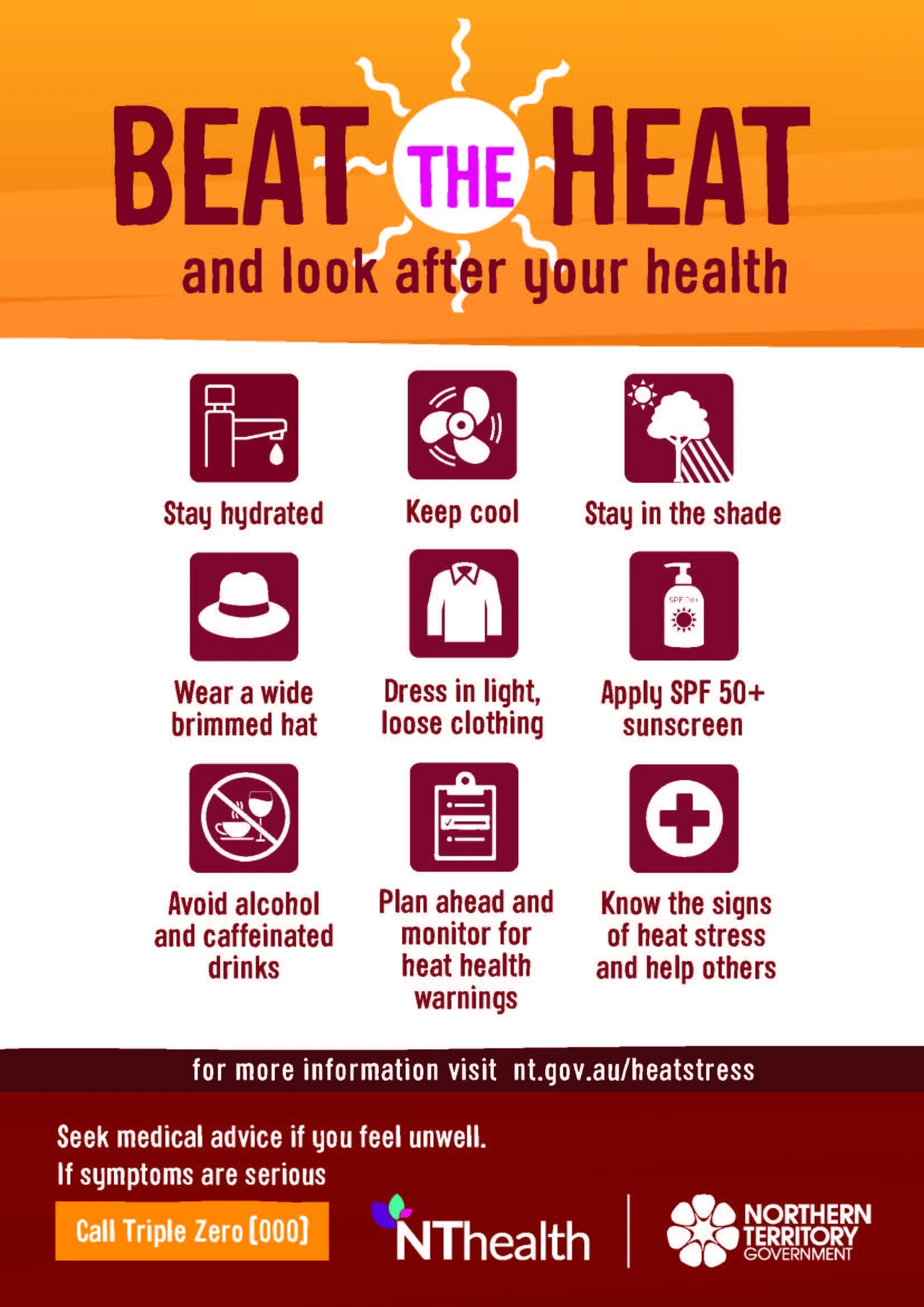
- drink plenty of fluids - 2 to 3 litres of water per day
- wear light clothing and wide-brimmed hat
- use sunscreen
- stay cool indoors:
- use curtains, shutters or awnings and leave windows open at night
- if you don't have air conditioning, use fans and damp towels
- have cold showers or a bath
- stay in air conditioned buildings
- get medical help if you have a chronic illness and feel unwell
- protect your pets by giving them shade and plenty of water
- plan ahead and monitor for heat health warnings
- know the signs of heat stress and help others.
Don't:
- push through with physical activity if you feel uncomfortable or unwell
- leave pets or children in parked vehicles - even with the windows open
- take salt tablets unless prescribed by a doctor.
Avoid:
- alcohol and caffeinated drinks
- strenuous activities for a few weeks until you get used to the heat
- doing activities during the hottest part of the day.
Babies and kids
Newborns, infants and young children are vulnerable to heat stress and illness.
If you're a parent, carer or educator, find out how to keep babies and kids safe from heat stress.
Heat stress symptoms
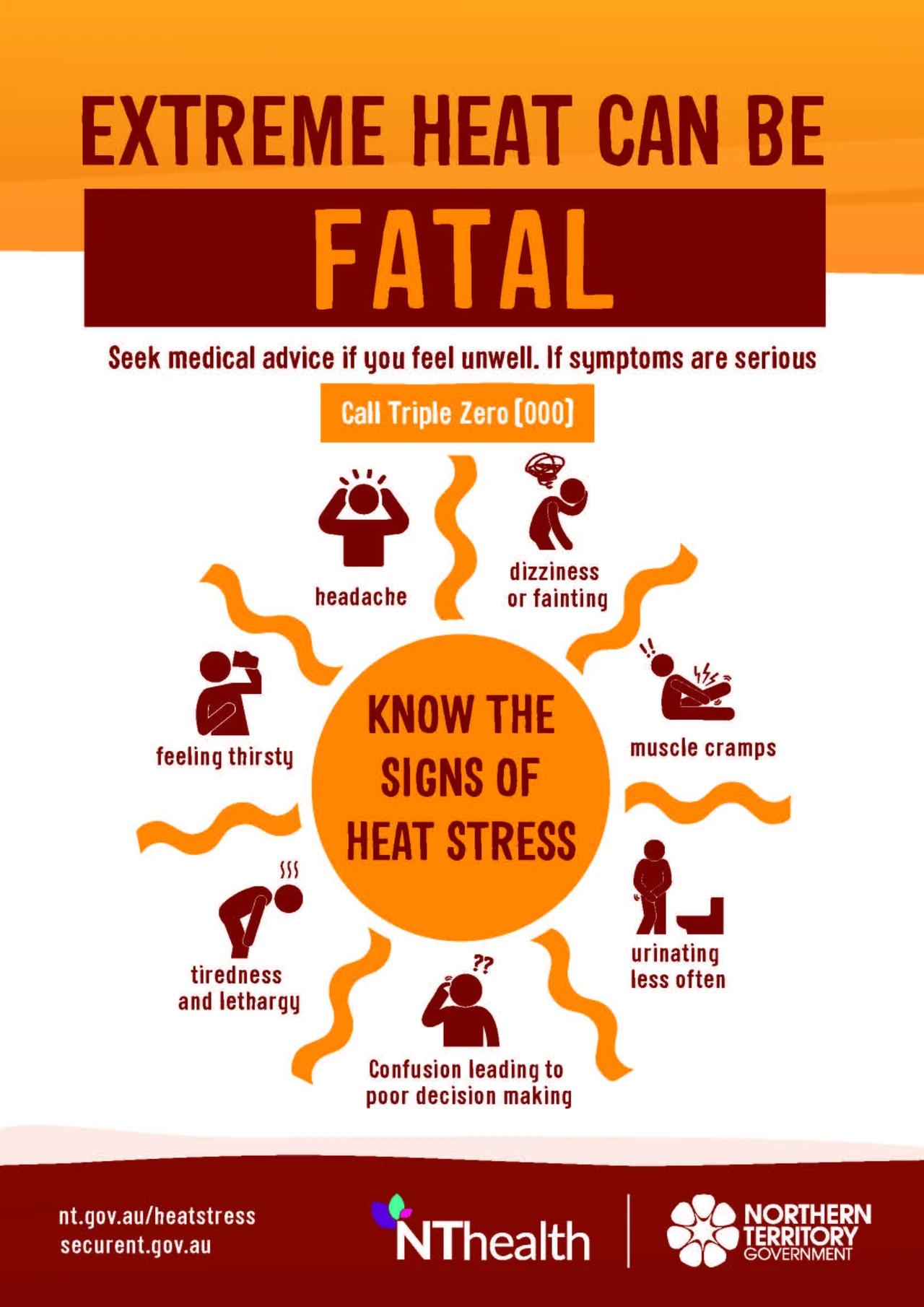
You should know the signs and symptoms of heat stress and illness and how to respond.
Common symptoms:
- headache
- feeling thirsty
- tiredness and lethargy
- confusion leading to poor decision making
- dizziness of fainting
- muscle cramps
- urinating less often.
To get the full list of symptoms and first aid care, read heat stress.
Check for heat health warnings
NT Health issues heat health warnings in response to severe and extreme heatwaves in the NT. They use the Australian Warning System.
Heatwaves can occur between October and March, putting you more at risk.
To check for heat health warnings, go to the Secure NT website and NT Health Facebook page.
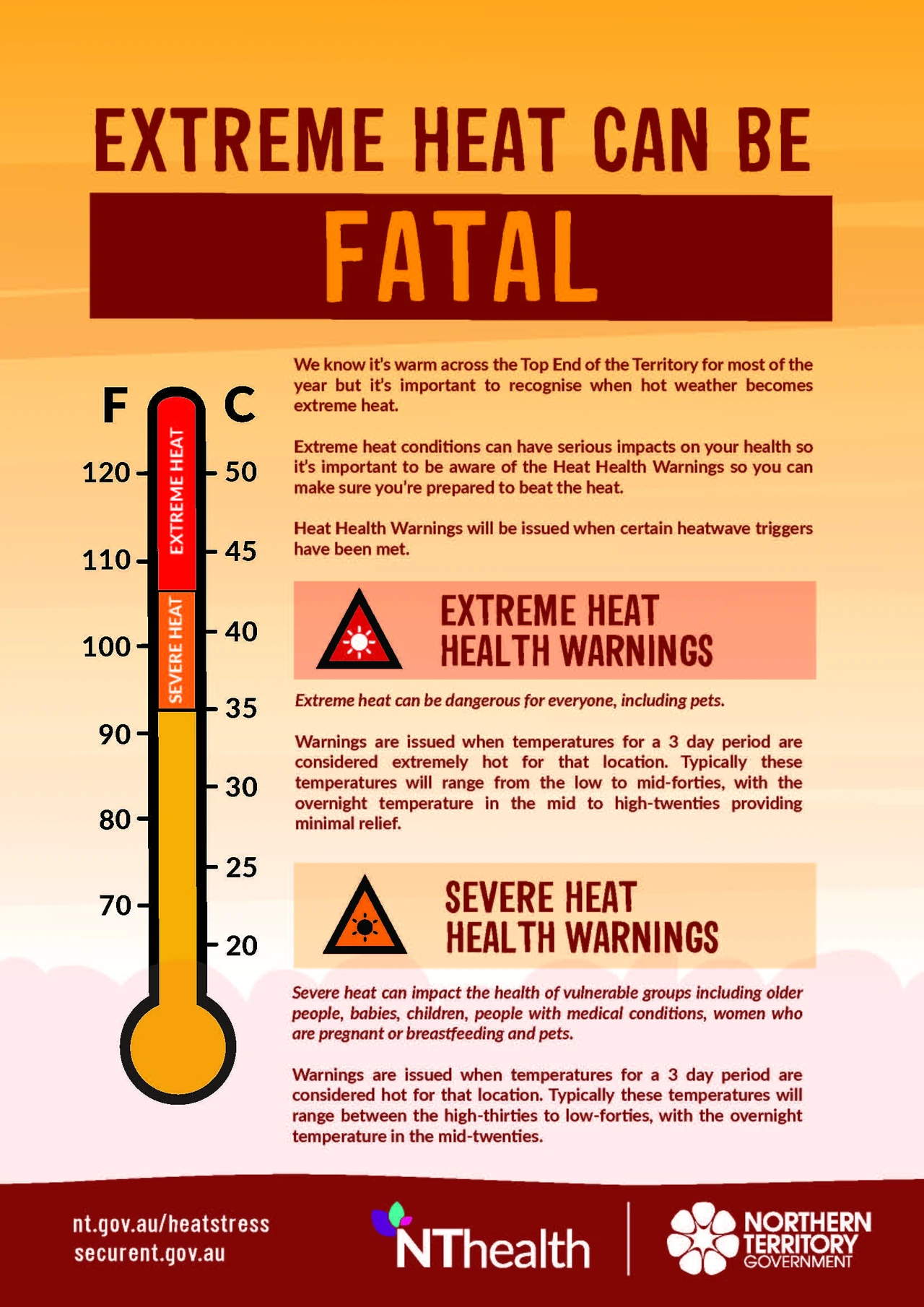
Severe heat health warnings
Severe heat can impact the health of vulnerable groups including:
- older people
- babies
- children
- people with medical conditions
- people who are pregnant or breastfeeding
- pets.
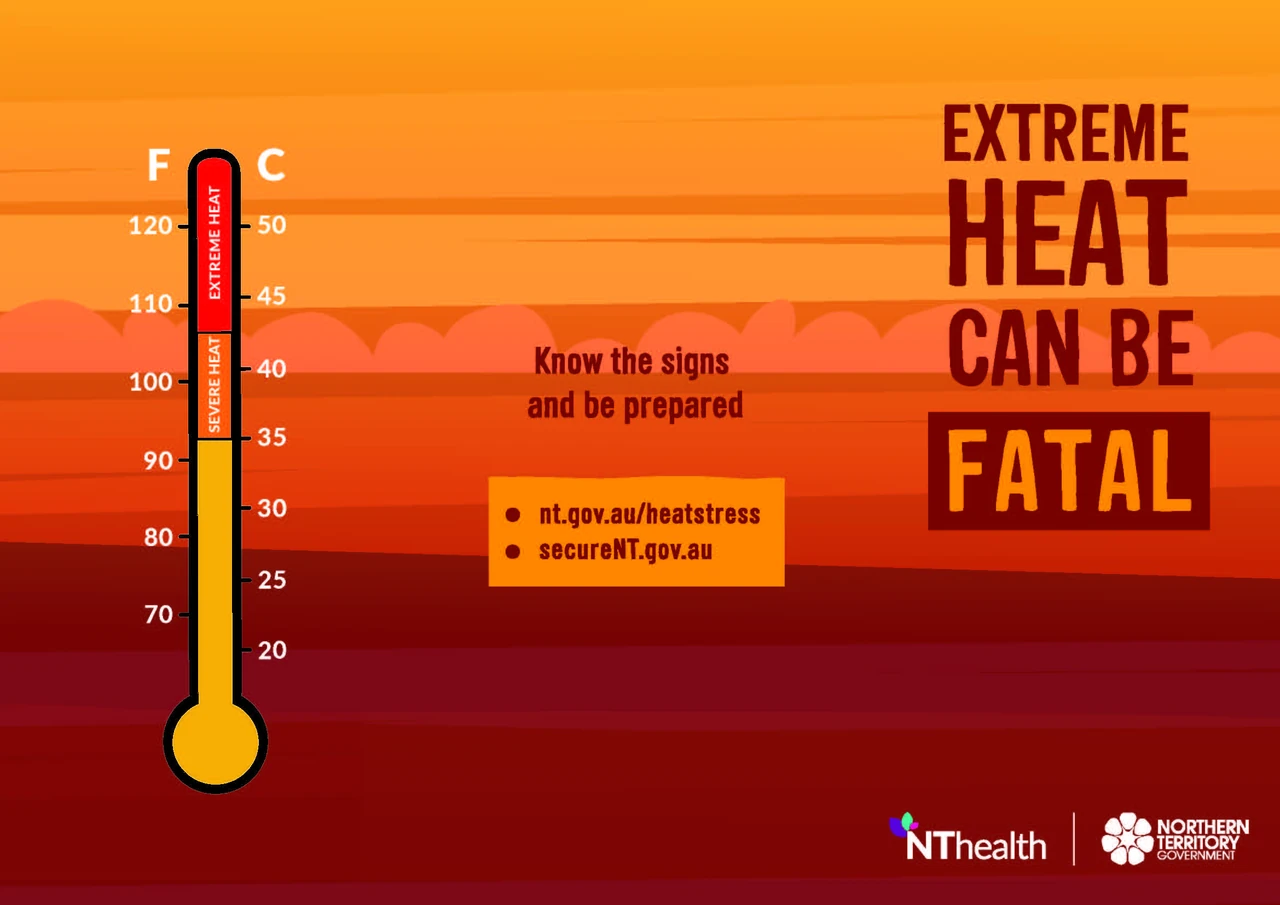
Severe heat temperatures range between the high 30s to low 40s, with overnight temperatures in the mid 20s.
Extreme heat health warnings
Extreme heat can be dangerous for everyone, including pets.
Extreme heat temperatures range from the low to mid 40s, with overnight temperatures in the mid to high 20s.
Resources
Get printable resources for your workplace, school or community space.
How to beat the heat poster PDF (159.6 KB)
| Heat health warnings poster PDF (227.2 KB)
|
Know the signs of heat stress poster PDF (158.6 KB)
| Beat the heat brochure PDF (392.7 KB)
|
Videos
Watch the extreme heat videos.
Tips to keep cool
Signs of heat stress and illness
Give feedback about this page.
Share this page:
URL copied!