
Cat's claw creeper
Scientific name: Macfadyena unguis-cati or Dolichandra unguis-cati
Declaration status: Class A
Cat's claw creeper is a Weed of National Significance. For more information, go to the Australian Government's Department of Environment website.
Cat’s claw creeper was introduced to Australia from tropical America as an ornamental garden plant.
It has since escaped into the wild and become a major weed in native forests and riparian areas of eastern Australia.
It has had a serious impact along coastal and hinterland streams in Queensland and northern New South Wales.
Cat’s claw creeper is not known to be naturalised in the Northern Territory.
Impact
Cat’s claw creeper can have all of the following impacts:
- smothers native vegetation
- changes soil chemistry
- grows up over and can kill mature trees
- opens up the canopy for light-loving weeds.
Identification
The following characteristics can help you identify cat’s claw creeper and distinguish it from similar-looking plants:
- a long-lived woody climber or creeper that can reach up to 30m in height when climbing tall trees
- older stems adhere to supports via short rootlets, while younger stems adhere to supports via claw-like leaf tendrils
- develops an extensive root system with tubers
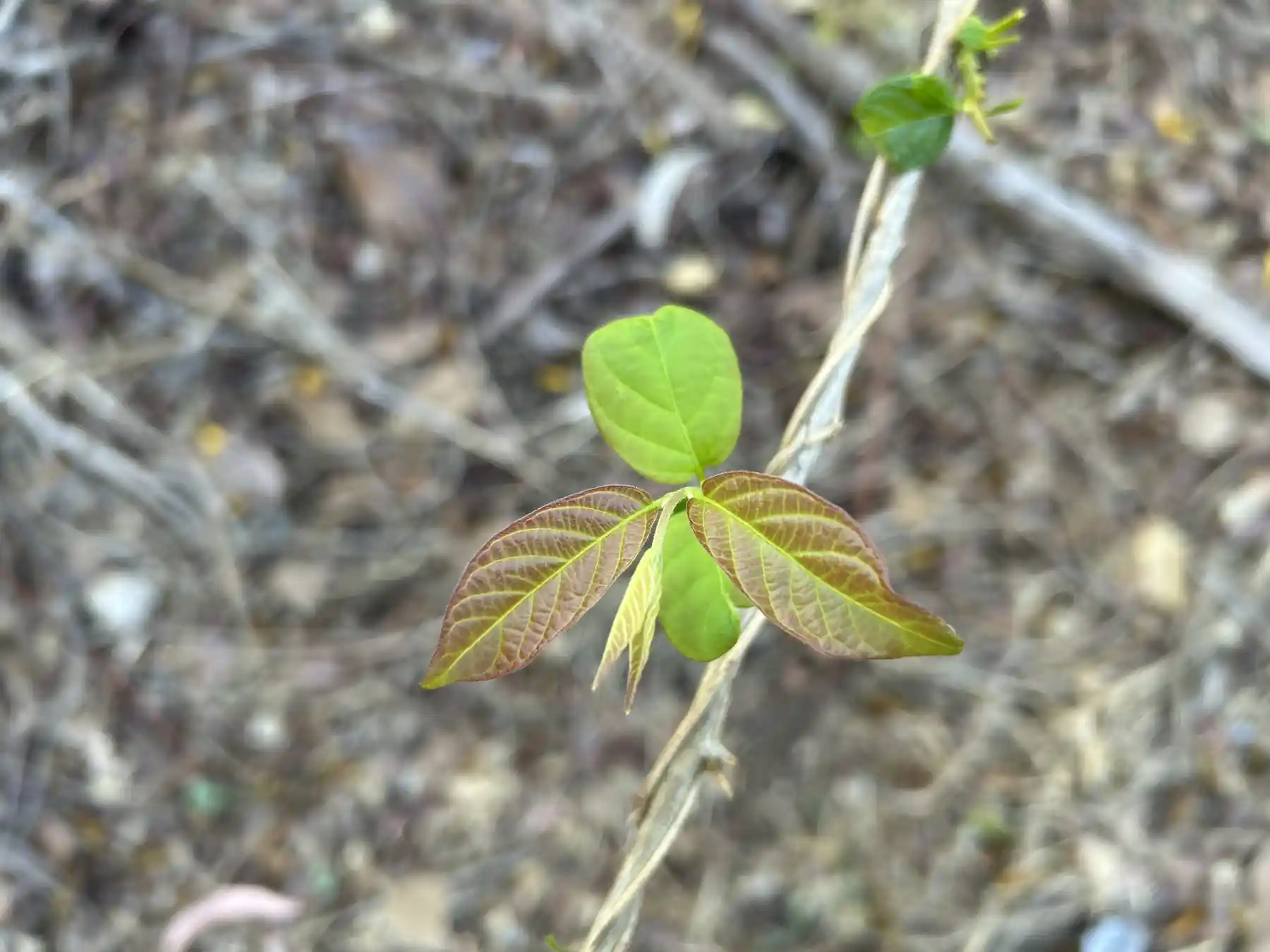
- leaves are highly variable in shape, colour and size and may be reddish-brown, bronze, light green or dark green with light coloured veins when young
- leaves each have 2 leaflets, with a 3 clawed tendril (the cat’s claw) growing between them, each claw is 3mm to 17mm long
- leaflets are usually 2cm to 7cm long and 1cm to 3cm wide
- young seedlings have simple leaves with slightly toothed margins
- flowers are bright yellow and showy, 4cm to 10cm long, up to 10cm wide, are tubular and have five lobes, each about 1cm to 2cm long
- flowers are borne singly or in clusters
- fruit (capsules) are generally 15cm to 50cm long and 8cm to 12mm wide, initially glossy green in appearance then turning dark-brown as they mature
- capsules are elongated, flattened, strap-like and contain numerous papery seeds
- when not in flower, cat’s claw creeper may be confused with the orange trumpet vine, which also has claws
- the easiest way to tell these two plants apart is to look for ribbing on the branchlets of the orange trumpet vine and feel the claws:
- orange trumpet vine has soft claws with a long stem
- cat’s claw creeper has stiff claws with a short stem and will ‘grab’ surfaces.




Control
If you think you have seen cat’s claw creeper or have it on your property, contact the Weed Management Branch for advice.
For more information, you can also read the cat's claw creeper management guide.
Give feedback about this page.
Share this page:
URL copied!